
Human Design is a method that allows us to see how we function in terms of our energy. Using elements of Astrology, the I Ching, the Chakra System, and Kabbalah, Human Design provides us with a complete blueprint of how we function as individuals in the world. We learn how we make decisions, what our strengths are, and what gets in the way of our functioning. Reading your Human Design chart is not about changing who you are, it’s about understanding who you are. This helps us stop wondering and start trusting. Once we know how we function, everything starts to make sense. We stop trying to force what doesn’t fit and start trusting what does.
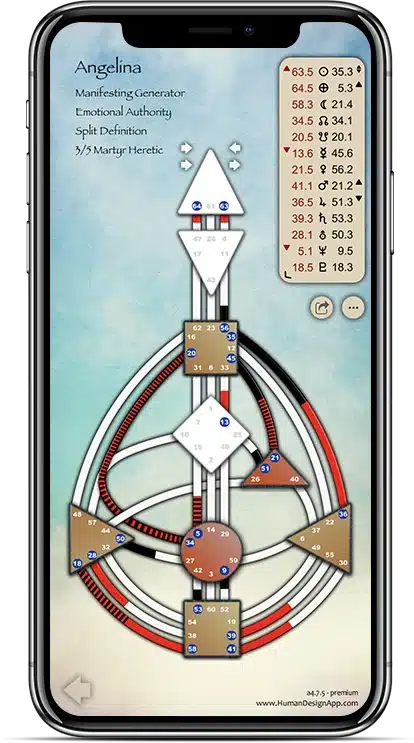
What to Expect
Self-Awareness: You’ll learn your type, strategy, and authority–the core tools that help you navigate life with ease.
Understanding Your Profile: Your profile shows how you interact with others and what roles feel the most natural to you.
Decoding Gates and Channels: These give us insight into where our natural abilities are and how our energy flows.
Planetary symbols and Centers: These provide additional insight into our deep life
themes and areas of consistency/openness.
This Guide explains each area so you can confidently read your chart.
Human Design Centers
The Effect of Learning About Human Design Charts
Learning your Human Design chart can completely transform your perspective. Many people find that learning about Human Design charts help them understand why they’ve been unhappy in certain jobs or relationships. It can help you understand patterns that didn’t make sense to you before.
Human Design is based on the principle that everyone is designed for something specific. When we stop comparing ourselves to others and start aligning ourselves with our own Human Design, our lives become smoother — more enjoyable, less resisting.
How To Read A Human Design Chart
At first glance, a Human Design chart appears to be quite complex, but there is value in each component of the chart. Here are the major components:
Planets
The planets in your chart relate to some aspect of your life (such as, purpose, love, communication, etc.) and the position of the planets at the time of your birth determines how you experience these aspects of your life.
Gates
Gates are specific characteristics/trait or themes. They’re like doors that open to parts of your personality or potential. Gates originate from the I Ching and are identified by numbers in your chart.
Channels
Two gates that connect form a channel. When both gates in a channel are activated, this energy flows through you consistently. Channels indicate your natural talents and how you express them.
Centers
Centers represent energy hubs in your chart. Each center relates to a different area (e.g., identity, emotion, logic, survival, etc.). A defined center (a colored center) indicates a consistent expression of that center. An undefined center (a white center) represents an open and/or receptive area that is shaped by external influences.
Your Human Design Chart Has Two Major Parts
Human Design – Soul/Black Activations
These are the parts of you that you are aware of. They come from your birth moment and reflect the ways you express your self-consciously. They define how you think, act, and move through the world.
Human Design – Red/Body Activations
These are the unconscious parts of you that come from approximately three months prior to your birth. They show you your unconscious programming – the forces behind the scenes that drive your responses and behavior.
Human Design Types
Manifestor
Manifestors are here to create. Their source of strength is creating. However, to create smoothly, they must first inform others of what they plan to do.
Generator
Generators are designed to sustain themselves. They are energized by responding to the world. They are meant to do work that satisfies them.
Manifesting Generator
Manifesting Generators are high-energy. Like generators, they respond to the world, but they also can act and then inform others. Still, they need to inform others after they begin.
Projector
Projectors are guides. Their energy is best used when others acknowledge them and invite them in.
Reflector
Reflectors reflect the world. They need about a month to “feel” what is true before making a significant decision.
Human Design Strategy
Manifestor Strategy: Tell Others Before You Act
Manifestors avoid resistance when they allow others to know what they plan to do. Telling others ahead of time cleans the path.
Generator Strategy: Wait To Respond
Generators work in the flow when they choose to respond rather than to force. Life presents to them what they need to respond to.
Manifesting Generator Strategy: Respond Then Tell
MGs respond like Generators but must inform others of what they plan to do. This keeps things running smoothly.
Projector Strategy: Wait to be Invited
Projectors are successful when others recognize their talents and invite them in. Waiting for the invitation saves them from burning out and becoming frustrated.
Reflector Strategy: Wait for a Complete Lunar Cycle
Reflectors need time to feel their way through life. Waiting for a complete lunar cycle helps them to feel whether what they think is true or not because their energy is constantly shifting.
Not-Self Theme
Manifestor Not-Self Theme: Anger
When Manifestors do not inform others, they hit walls. Anger occurs when they are misunderstood or blocked.
Generator Not-Self Theme: Frustration
Frustration occurs in Generators when they are in the wrong job or trying to create something on their own. When they feel stuck, they know to wait and listen.
Manifesting Generator Not-Self Theme: Frustration And Anger
When MGs act too fast or do not inform others of their plans, they experience both frustration and anger. This is a signal to pause and adjust.
Projector Not-Self Theme: Bitterness
Bitterness occurs in Projectors when others do not recognize them or invite them into action. Bitterness is a message that they are either pushing too hard or are in the wrong place.
Reflector Not-Self Theme: Disappointment
Disappointment occurs in Reflectors when they decide too early or are in the wrong environment. When they are disappointed, it is a reminder to reconnect.
Human Design Authority
Human Design Authority Definition
Authority is how you make decisions that feel right. Authority is your internal compass. Every person’s authority is unique. Understanding your authority makes decision-making clear and easy.
Emotional Authority
Emotional Authority: Do not rush. Follow your emotions until you are clear about what you want to do.
Sacral Authority
Sacral Authority: Listen to your gut. It is your Yes/No indicator.
Splenic Authority
Splenic Authority: Listen to your intuition. It is fast and quiet, but it is guiding you.
Ego Authority
Ego Authority: You are here to follow your will. If you want something and it feels right, that is your answer.
Self-Projected Authority
Self-Projected Authority: Talk it out. As you talk, your truth begins to emerge. Listen to your voice for guidance.
Human Design Centers
Crown/Head: Inspiration
The Crown/Head center generates ideas and pushes questions into your mind. Defined Crown/Head generate their own ideas; Undefined Crown/Head absorb ideas.
Ajna/Mind: Thought Processing
Ajna is the center that processes and organizes thought. Defined Ajna = consistent thinking; Undefined Ajna = adaptable thinking.
Throat: Expression
All expression passes through the Throat. It is how you communicate, act, and manifest.
G-Center: Direction/Love/Self-Identity
This is your sense of direction, your sense of love and your sense of self. Defined G-Center = consistent self; Undefined G-Center = adaptable self.
Heart: Drive/Ego
The heart is the center of will and drive. Defined Heart = consistent will; Undefined Heart = driven to prove.
Spleen: Instinct
Spleen is the survival center that responds to fear. Defined Spleen = consistent instinct; Undefined Spleen = sensitive to fear.
Sacral: Work/Life Force
Sacral is the center of life force and the engine of work/life. Defined Sacral = consistent life force; Undefined Sacral = takes life force from others.
Solar Plexus: Emotions
Solar Plexus is the center of emotion. Defined = rides own emotional wave; Undefined = highly empathetic to others’ emotions.
Root: Pressure/Drive
Root is the center of stress/fear/pressure to act. Defined Root = consistent; Undefined Root = under pressure from others.
Human Design Profiles
Human Design Profiles Explanation
Profiles are created by combining two numbers and describe how you interact with the world. One number represents what you are aware of; the second number represents what you are unaware of. Both together describe how you learn, how you develop relationships, and how you grow. For example, a 1/3 is someone who needs to experiment and learn through study. A 2/4 is someone who needs time to be alone, but thrives on relationships. Each combination describes a different version of you.
Human Design Gates
Gates in Human Design
Gates represent traits in your chart. They are numbered aspects of your design that describe your potential. Defined gates bring your potential to the forefront. For example, Gate 5 is all about rhythm; Gate 34 is raw power. Each gate builds upon your story.
Human Design Channels
Channels in Human Design
When two gates are connected, a channel forms. Channels show your natural talents and the flow of energy within you. Think of channels as highways between the centers in your chart that add depth to how your energy functions.
How to Put It All Together: A Step-by-Step Process to Read Your Human Design Chart
Begin with your Type — your Type tells you how you function. Next, learn your Strategy and Authority — your Strategy and Authority are your guidelines for making decisions. Finally, look at your Centers — which ones are defined and which ones are open. Then look at your Gates and Channels — each section adds another level to your understanding of how your energy functions.
Conclusion
Your Human Design chart is a roadmap back to yourself. The more you understand your Human Design chart, the more you will see what is uniquely yours and what is not. By using your Human Design chart, you will stop forcing and start flowing. With this knowledge, you will be able to make wiser decisions, build stronger connections with others, and live more authentically in every area of your life.
Apple Store
Download for free on Apple Store
Google Play
Get it for free on Google Play
FAQs
A person’s type in Human Design represents how a person’s energy functions and how he or she relates to the environment. In addition to the four primary types — Generators, Manifestors, Projectors, and Reflectors — each person has a unique way of processing information, how to make decisions, manage energy and succeed. For instance, Generators function as responders, while projectors generally do best when they’re acknowledged and invited.
In your chart, defined centers are filled in and therefore are areas of consistency and stability. Undefined centers are white — they are open to receiving energy from the people surrounding you. As such, understanding how they function can help you remain grounded in who you are.
Gates in a chart represent little pockets of energy — each gate is associated with a particular trait or theme. When two gates meet over centers, they create a channel. The channel indicates that the theme of the two gates is expressed in a stronger and more obvious way in your life than just the individual gates. Gates, on their own, represent potential. A channel shows how those energies are expressed and move through each other.
Colors in your chart indicate the presence of various themes in your design. Defined centers are colored in because the energy of that area is consistent. Black lines and numbers represent the conscious aspects of your being — things you are consciously aware of. Red lines represent the unconscious aspects of your being — things that drive you whether you are conscious of them or not.
Together, they represent how your energy operates.
Numbers on your chart refer to the Gates. Gates refer to a quality, ability or pattern present in your life. Some numbers are black (representing conscious qualities) and some numbers are red (representing unconscious qualities.) If two numbers appear on either side of your chart, they may form a channel (a pathway of energy that you naturally express.)
Human Design provides you with a map of your energy functions — how you make decisions, what makes you sensitive, what kinds of work and people will support you and what will disrupt you. Human Design is not a tool to change you; it is a means of recognizing what is already true for you and allowing you to stop resisting yourself and live in greater harmony.
If you see a number next to your chart, it probably refers to a specific Gate, Line or Profile. For example, if you see “Gate 34.5,” this is referring to the combination of Gate 34 and Line 5. The combination of all three elements of your design (the Gate, the Line, and the Profile) forms a narrative about your gifts, your challenges, and how you interact with others. The numbers are essentially coordinates on your personal energy map.